
23 June 2023
Children and the Dinosaur Phase: The Benefits of Fascination
What is it with children and dinosaurs? No matter the generation, there’s no escaping the dinosaur phase! But have you ever wondered what’s behind it? It may be more important for early childhood development than you think 🦖 Is your child watching The Land Before Time on repeat? If so, they’re probably in the famous…

What is it with children and dinosaurs? No matter the generation, there’s no escaping the dinosaur phase! But have you ever wondered what’s behind it? It may be more important for early childhood development than you think 🦖
Is your child watching The Land Before Time on repeat? If so, they’re probably in the famous ‘dinosaur phase’ – a time when children become obsessed with all things prehistoric.
The dinosaur phase usually begins around age two or three and can last well into primary school. While it might seem like a passing interest that will make for some great additions to the photo album, it may also contribute to your child’s creativity, confidence and cognitive development.
For many children, this fascination comes to life through play. In early learning environments, dinosaur-themed experiences can support curiosity, imagination and learning by giving children the chance to explore big ideas through stories, questions, movement and hands-on discovery.
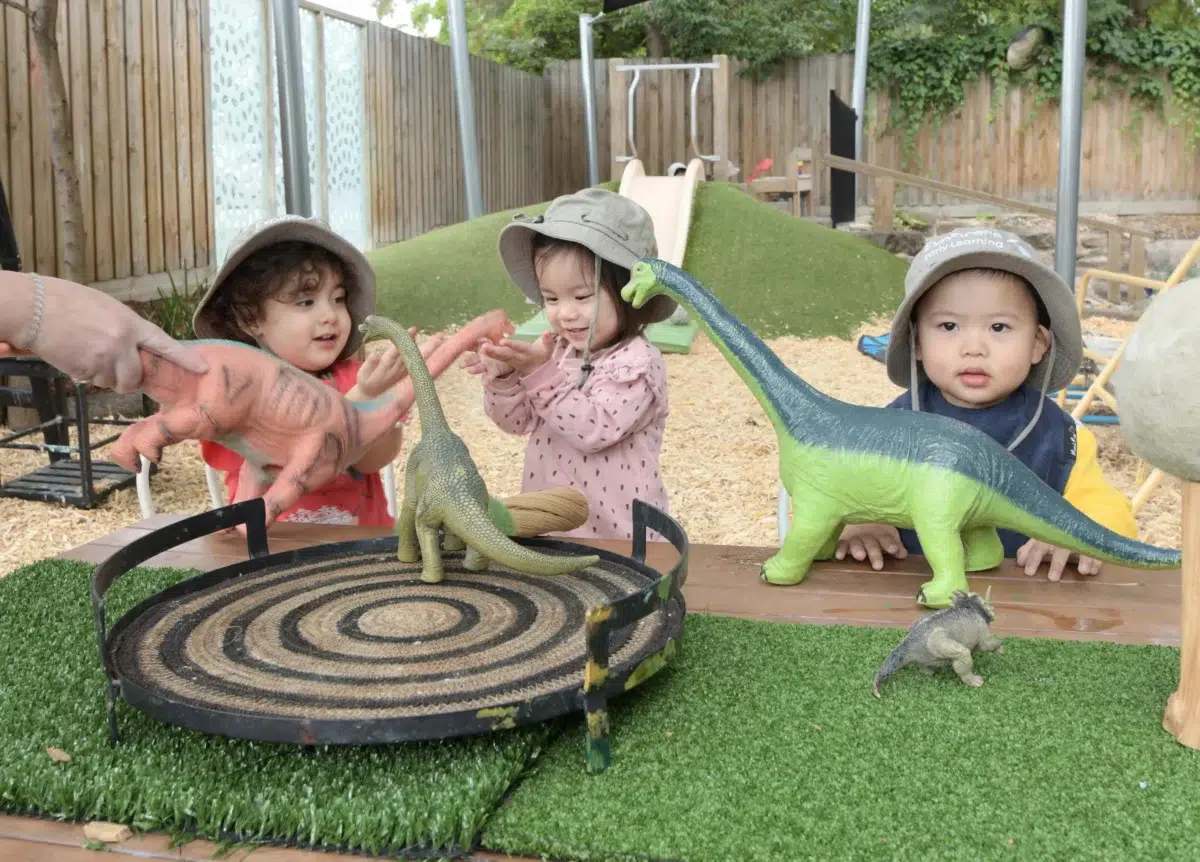
Many childcare centres use dinosaur-themed play and exploration areas to encourage science, language and creative thinking. A thoughtfully created dinosaur area childcare setting might include books, small-world play, sensory trays and natural materials, helping children explore the benefits of playing with dinosaurs for toddlers in a joyful, age-appropriate way.
In this article, we explore the benefits of the dinosaur phase, even if your living room does become a temporary Velociraptor enclosure.
Promotes Curiosity and Exploration
Children in the dinosaur phase are naturally curious about the world around them. They ask the big questions, seek answers, and investigate new ideas. Naturally, this leads to stimulating learning experiences as they read and discover how dinosaurs lived, what they ate, and how they evolved over their 165 million year reign on Earth.
Better yet, it’s a great opportunity for activities and continued learning:
- A trip to the museum
- Digging for fossils in the backyard
- Taking a nature walk
- Imaginative play in a sandpit
This curiosity and exploration can help children develop a lifelong love of learning and an appreciation for science and research.
Dinosaur Play Areas in Childcare
A dinosaur area childcare setting can become a rich space for imagination, language and discovery. Children might explore toy dinosaurs, books, sensory trays, sand, leaves, rocks and nature-inspired materials as they create stories and investigate the prehistoric world through play. These dinosaur exploration areas can also spark thoughtful conversations about different species, including raptors. Many children are fascinated by raptors because they can remember details such as sharp claws, speed, teeth and feathers, which encourages observation, questioning and early scientific thinking.
Enhanced Language Development
As children learn about dinosaurs, they are exposed to an extensive vocabulary related to science, history and paleontology. Although they may not understand all of these phrases, just pronouncing them can be a phonetic exercise that may lead to a better understanding of written and spoken words.
Learning to pronounce terms like ‘Tyrannosaurus rex,’ ‘herbivore’ and ‘fossilisation’ create new neural pathways and stimulate cognition. This exposure to new words and concepts can help them develop language skills, improve communication, and expand vocabulary.
Make New Friends
If your toddler is going through the dinosaur phase, chances are there are many others in their childcare room, kinder or family circle on the same journey. You can use this shared fascination to organise playdates and help your child build new friendships.
In fact, according to the American Academy of Paediatrics, peer play and games are essential to their early development:
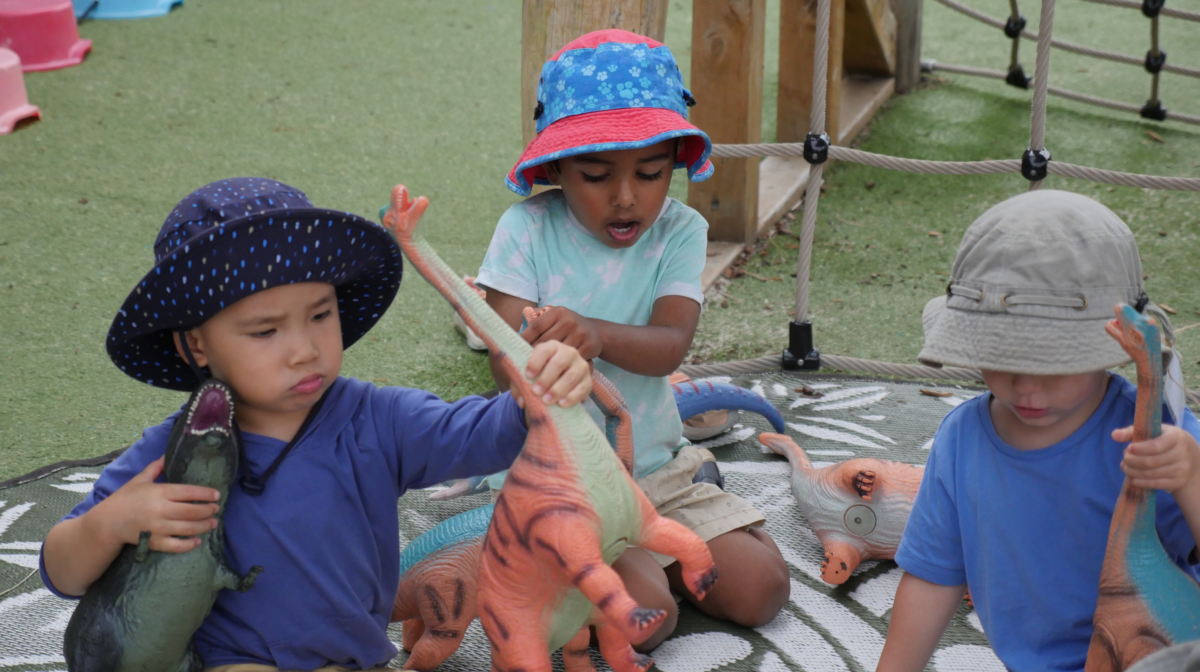
Peer play and pretend play can support early development because children practise collaboration, shared ideas and self-regulation. When children create a dinosaur world together, they learn to negotiate roles, take turns and imagine possibilities alongside others.
Sparks Creativity and Imagination
By its very nature, the dinosaur phase requires imaginative play. As dinosaurs no longer exist, they naturally encourage creativity and fascination for children. This is likely because of their likeness to fictional creatures such as dragons.
As dinosaurs no longer exist, they naturally invite creativity, wonder and fascination for children. This may also be why children often connect dinosaurs with fictional creatures such as dragons.
You can use this fascination to encourage all kinds of creative dinosaur activities. Children might draw pictures, build models or flex their dinosaur muscles by pretending to be a gentle Brontosaurus or a roaring Tyrannosaurus rex. This kind of imaginative play develops creativity and encourages abstract thinking.
Themed learning spaces, such as dinosaur play areas in childcare centres, can also help children build stories, take on roles and explore ideas creatively with others. A group of children may turn a sandpit into a fossil dig, a block area into a dinosaur habitat, or a quiet reading corner into a place to compare what they know about raptors, from their claws and teeth to the idea that Velociraptor had feathers.
Puts Time and History into Perspective
At around age 4 to 5, children begin to understand that the world existed long before they did. They also begin to learn that our history is fascinating and complex. The dinosaur phase can introduce children to this concept in a fun and accessible way.
Children learn about an entirely different world with its own creatures and ecosystems from more than 66 million years ago. The number itself can spark wonder and awe.
It is sometimes said that palaeontologists are grownups who never grew out of the dinosaur phase. An early fascination with science can lead children to develop strong interests in archaeology, geology, meteorology and environmental science.
Promotes a Love of Nature and the Environment
As children learn about dinosaurs, they also learn about the environment they lived in and the impact that humans have on the planet today. This can help them develop a sense of responsibility for the natural world and a desire to preserve it.
Overall, the dinosaur phase is so much more than just a passing fad. It’s an opportunity for your child to express their creativity, independence, and foster a lifelong love of science and the natural world. So be sure to encourage their interest in dinosaurs by reading books, visiting museums, and engaging in imaginative play. Who knows, your child might grow up to discover the next dinosaur species.
Dinosaur Play, Childcare and Early Learning
At Explorers Early Learning, we see play as a powerful part of children’s learning. Through our child care curriculum, children are supported to explore their interests, build confidence and make meaning through joyful, hands-on experiences.
Dinosaur play can sit beautifully within a preschool and kindergarten program, helping children practise language, storytelling, problem-solving, social confidence and early scientific thinking in ways that feel natural and playful.
🍃 To tour one of our beautiful Centres, please click here. Otherwise, check out our website to register your interest at Explorers Early Learning today!
Dinosaur Play and Early Learning FAQs
Why do many children go through a dinosaur phase?
Many children are drawn to dinosaurs because they feel big, exciting and full of mystery. Dinosaurs give children a way to ask questions about the world, explore new ideas and feel confident sharing what they know.
How does dinosaur play support early childhood learning?
Dinosaur play can support language, imagination, problem-solving and early science skills. As children name dinosaurs, create habitats, compare sizes or talk about fossils, they are building vocabulary, curiosity and confidence through play.
What activities can be included in a dinosaur area in childcare?
A dinosaur area in childcare can include toy dinosaurs, books, sensory trays, sand, rocks, leaves, magnifying glasses and small-world play materials. These experiences encourage children to tell stories, investigate textures, ask questions and explore the benefits of playing with dinosaurs for toddlers in a hands-on way.
How do themed play areas help children learn in childcare centres?
Themed play areas help children connect ideas across language, creativity, science and social play. In a dinosaur-themed space, children might work together to build a habitat, act out a story, compare dinosaur features or share what they know about raptors.
What skills can children develop through dinosaur-themed play?
Dinosaur-themed play can help children build communication, imagination, fine motor skills, social confidence and early research skills. It also encourages persistence and curiosity as children investigate questions, test ideas and return to their favourite interests over time.
The Bigger Picture of Dinosaur Play
When children are deeply interested in something, they are showing us how they learn. A dinosaur phase can open the door to storytelling, scientific thinking, movement, creativity, friendships and a growing sense of wonder about the world.
The benefits of playing with dinosaurs for toddlers are not only about dinosaurs. They are about curiosity, confidence and connection, the foundations that help children keep learning in joyful and meaningful ways.
If you are looking for childcare centres where curiosity, creativity and belonging are nurtured every day, we would love to welcome you for a tour. You can also use our Child Care Subsidy Calculator to help plan your family’s early learning journey.