
7 April 2026
Why Outdoor Learning Spaces Matter in Early Childhood Education
Outdoor play spaces in early childhood education are a must. Here’s everything you need to know about the benefits of learning outdoors.
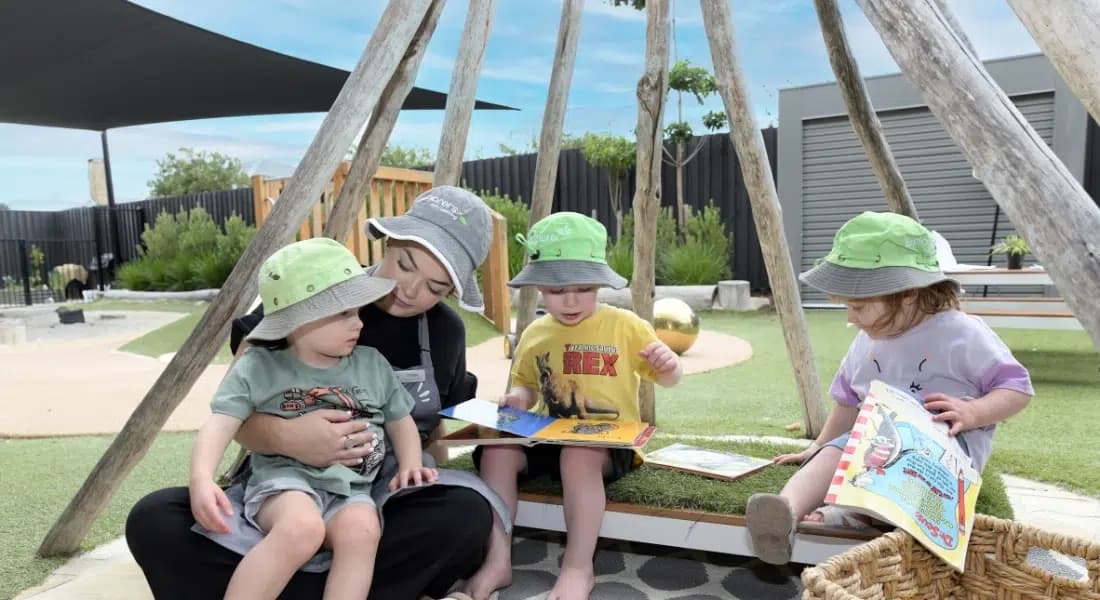
Outdoor play spaces in early childhood education are vital for growth and learning across all ages. Here’s everything you need to know about the benefits of learning outdoors and how childcare centres bring it to life.
In early childhood education, where and how children learn is just as important as what they learn. Outdoor environments are no longer seen as a “break” from the classroom. Rather, they are an essential extension of it, alive with possibility and rich in learning.
Step outside into an early learning environment and you’ll see it straight away. There’s movement, there’s noise, there’s curiosity unfolding in real time. Children are doing so much more than playing. They’re navigating uneven ground, negotiating games, testing limits and building confidence with every step, climb and question. It’s hands in the dirt, eyes on the sky, and minds fully engaged. This is where learning becomes tangible, where theories turn into lived experiences.
Because outdoor play isn’t just about fresh air, it’s about freedom, agency and discovery. It’s where risk-taking meets resilience, where imagination runs wider, and where children begin to understand their place in the world around them.
Discover more: The Benefits of Imagination Play
From open-ended play to intentional teaching moments, outdoor environments create opportunities for children to connect, explore and grow in ways that simply can’t be replicated indoors. Once you see it in action, it’s impossible to look at learning the same way again.
What are Outdoor Play Spaces in Early Childhood Education?
Outdoor learning in early childhood education is a child-oriented, play-based approach that takes learning beyond four walls. It’s not just about being outside, it’s about creating meaningful experiences in environments that invite curiosity, creativity and connection.
Think less instructional playground time, and more intentional and structured exploration. Children might be:
- Investigating natural materials like leaves, sticks and stones
- Engaging in sensory play through sand, water or mud
- Climbing, balancing and navigating physical challenges
- Observing seasonal changes and learning about the natural world
- Collaborating with peers in open-ended, imaginative play
Grounded in a Reggio Emilia-inspired philosophy, outdoor learning recognises the environment as the “third teacher.” Every element, whether it’s a garden bed, a climbing structure or a quiet nook, has the potential to spark discovery and deepen learning.
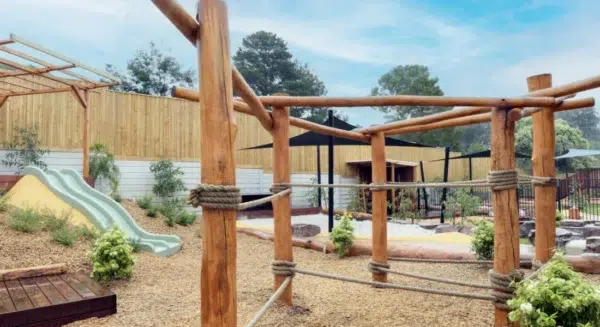
The Benefits of Outdoor Learning in Early Childhood Education
The benefits of outdoor play spaces in early childhood go far beyond fresh air and physical activity. Outdoor learning supports every aspect of a child’s development; socially, emotionally, physically and cognitively, as documented by the Victorian Department of Education and Training.
Supports Physical Development
Outdoor environments encourage children to move their bodies in dynamic ways. Running, climbing, balancing and jumping help build strength, coordination and confidence. In an Australian early learning setting, where weather and space can vary day to day, outdoor play also challenges children to adapt their movements.
Whether it’s navigating wet grass, uneven surfaces or open parklands, building physical literacy that goes beyond the classroom.
Enhances Social Skills
Open-ended outdoor spaces create opportunities for collaboration, negotiation and teamwork. Children learn to share ideas, solve problems and build relationships through play. These shared outdoor experiences also become a space where children encounter different perspectives and communication styles, strengthening their ability to connect and belong.
Encourages Resilience and Independence
Outdoor play introduces manageable risks such as climbing higher or navigating uneven surfaces. These experiences help children develop resilience, independence and decision-making skills. When safety is balanced with exploration, children are supported to assess risk in real time. Learning not just what they can do, but how far they can push themselves safely.
Fosters Creativity and Imagination
Without fixed outcomes or rigid structures, outdoor environments invite children to think creatively. A stick can become a wand; sand can transform into a castle. The possibilities are endless and creative thinking and imagination are the only things standing in the way.
From leafy suburbs to coastal centres, these materials shift with the seasons, giving children ever-changing inspiration to build, create and tell new stories.
Strengthens Connection to Nature
Spending time outdoors nurtures an early appreciation for the environment. Children begin to understand sustainability, care for living things and their place in the natural world. Fostering an environmental awareness from a young age, early exposure to gardens, native plants and local wildlife helps children build a lifelong respect for Country and the ecosystems around them.
Supports Emotional Wellbeing
Nature has a calming effect. Outdoor play can reduce stress, improve mood and provide children with a sense of freedom and belonging. In the fast-paced rhythm of city life in Melbourne, these moments outside become even more important, offering children space to reset, regulate and feel grounded in a way indoor environments often can’t replicate.
Extends Learning Opportunities
Outdoor environments naturally integrate concepts like science, early numeracy and early literacy. Counting leaves, observing insects or discussing weather patterns all become part of everyday play. This often connects directly to local contexts, like tracking seasonal changes, exploring sustainability practices or engaging with community spaces. In turn, learning makes learning feel immediate, relevant and real.
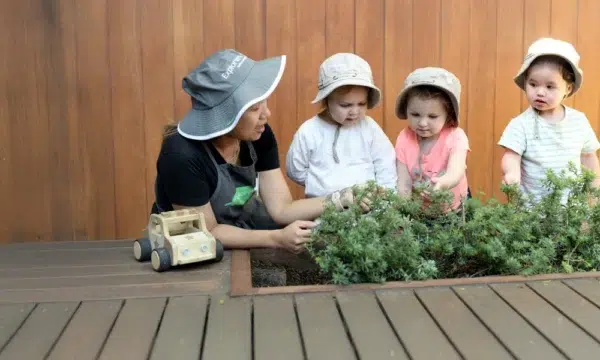
Outdoor Learning at Explorers Early Learning
At Explorers Early Learning, outdoor environments are designed with intention. They are a core part of how we deliver our Learning for Life curriculum across all age groups and bring our Framework of Joy to life. Our outdoor play spaces in early childhood settings go beyond the expected. Each space is carefully curated to inspire exploration, independence and meaningful learning.
Nature-rich Environments
Our centres feature natural elements that encourage sensory exploration and connection to the environment. From gardens and natural play structures to water features and open green spaces, children are immersed in environments that feel authentic and engaging.
Open-ended Play Opportunities
Rather than fixed equipment with one purpose, our outdoor spaces are designed for flexibility. Children can lead their own play, experiment with materials and create their own learning pathways.
Intentional Teaching Outdoors
Educators extend learning beyond the classroom by incorporating intentional teaching moments into outdoor play. Whether it’s exploring sustainability through gardening or investigating scientific concepts through nature, learning is seamlessly integrated into the environment.
Spaces For Every Child
We recognise that every child engages outdoors differently. That’s why our environments include a balance of active and quiet spaces such as areas for climbing and running, as well as calm zones for reflection, creativity and rest.
A Focus on Wellbeing and Belonging
Outdoor spaces are designed to support children’s sense of belonging. They provide freedom, choice and opportunities for children to feel confident and capable in their environment.
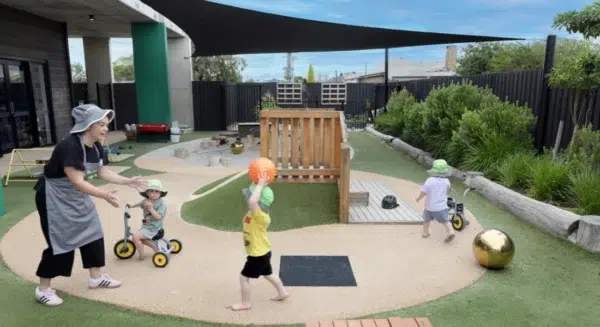
Experience Outdoor Learning at Explorers for Yourself
Whether it’s at the centre themselves, through our Bush Kinder program or at Explorers Somerville, we embrace outdoor learning every day at Explorers.
It lives in every thoughtfully designed space, every muddy hand, every moment of discovery that unfolds beyond four walls. It reflects our commitment to creating environments where children can truly thrive, guided by curiosity, joy and a lifelong love of learning that begins long before formal schooling ever starts.
Discover more: A Beach Kinder Program Like No Other
Because when you step into an outdoor learning environment done well, you feel the difference immediately. It’s in the way children move with confidence, how they collaborate without hesitation, and how naturally learning weaves itself into play. Each moment children spend in our outdoor spaces at Explorers, they’re the foundations of resilience, independence and deep, meaningful understanding. It’s learning that sticks, because it’s experienced, not instructed.
There’s only so much that words can capture. You can describe the laughter, the problem-solving, the quiet moments of focus and the bursts of imagination. However, the real impact of thoughtfully designed outdoor play spaces in early childhood is something you need to see to fully appreciate. It’s in the energy, the atmosphere, the sense that something important is happening in real time.
We invite you to visit your local Explorers Early Learning centre and experience it firsthand. Walk through our outdoor environments, pause and observe children deeply engaged in meaningful play, and see how learning comes to life beyond the classroom in ways that feel both natural and powerful.
Book a tour today and discover how Explorers Early Learning is reimagining what outdoor learning can be.