24 February 2026
Reggio Emilia and Montessori: What’s the Difference?
Reggio Emilia and Montessori of two popular and different early learning approaches. Here’s everything you need to know about both.
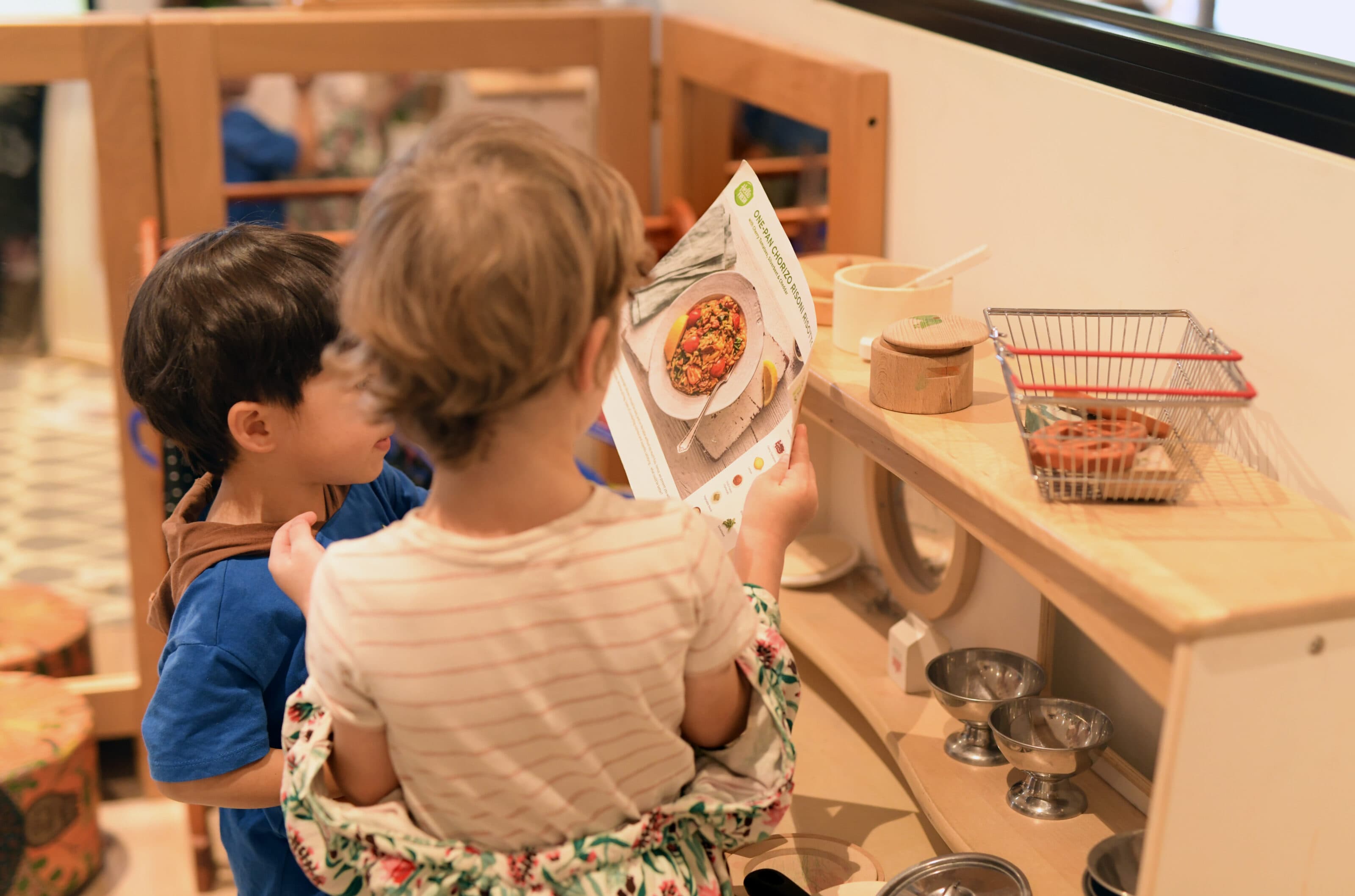
Reggio Emilia and Montessori of two popular and different early learning approaches. Here’s everything you need to know about both.
If you’ve spent more than five minutes researching early learning, chances are you’ve come across both the Reggio Emilia Approach and the Montessori Approach more than once.
They’re two of the most talked-about early education philosophies in Australia and on paper, they can sound quite similar. Child-led. Play-based. Respectful of independence. Not your traditional classroom.
Discover more: How Construction Play Supports Early Learning
But when you dig a little deeper into Reggio Emilia vs Montessori, the differences start to matter, especially when it comes to choosing the right environment for your child.
For any parents still unsure what these two early learning approaches are, and what sets them apart, here’s what you need to know.
What is the Reggio Emilia Approach?
The Reggio Emilia approach was founded in the Italian town of Reggio Emilia by Loris Malaguzzi after World War II. At its core, Reggio Emilia sees children as capable, curious and full of potential. They aren’t empty vessels waiting to be filled with knowledge, they’re active participants in their own learning.
It’s known for:
- Project-based learning
- Creativity and the arts
- Strong community and family involvement
- Beautiful, intentional learning environments
Reggio Emilia classrooms are often open, light-filled spaces designed to provoke curiosity. Natural materials, artwork, documentation panels and collaborative areas often centered around a piazza are some of the key features. Importantly, the approach recognises three teachers:
- The Educator: A collaborator and co-learner
- Parents: Active partners in the learning journey
- The Environment: Intentionally designed to inspire exploration
How Do Children Learn Through Reggio Emilia?
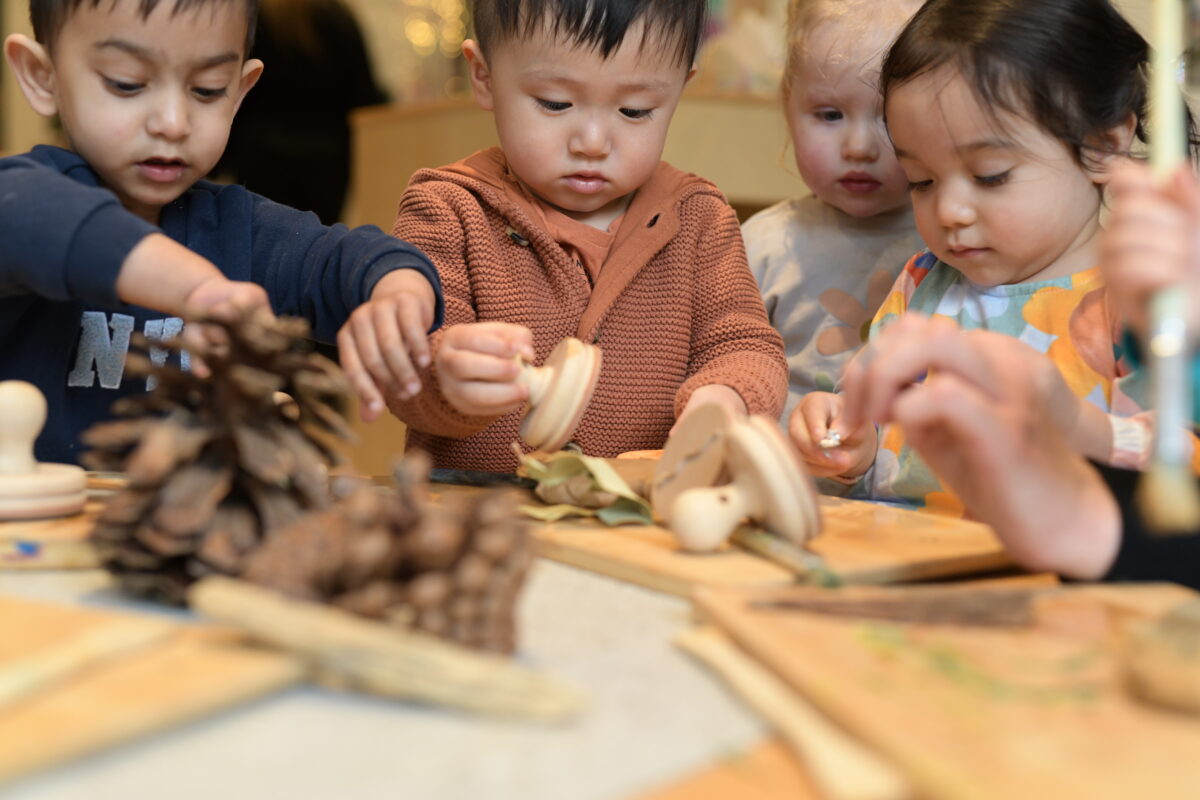
In Reggio Emilia, learning follows the child’s interests.
This is called an emergent curriculum. What does this mean? It means that experiences evolve organically from children’s questions, fascinations and discoveries. If a group becomes interested in space, for example, Educators might introduce star charts, projection lights, recycled materials for model-making or storytelling provocations. From there, deeper questions emerge:
- How big is space?
- What is the Milky Way?
- Why do planets move?
Rather than following a fixed lesson plan, Educators document children’s thinking, extend conversations and co-construct knowledge alongside them. Collaboration is central. Children work in small groups, share ideas and build theories together. The goal isn’t just independence, it’s connection, creativity and critical thinking.
What is the Montessori Approach?
The Montessori approach was developed in the early 1900s by Italian physician and educator Maria Montessori. Like Reggio Emilia, Montessori respects children as capable learners. But the structure looks different.
Montessori classrooms are carefully prepared environments filled with specific, purpose-built materials designed to teach particular skills. Many of these materials are self-correcting, meaning children can identify and fix mistakes independently.
Montessori focuses on:
- Independence
- Practical life skills
- Concentration and self-discipline
- Individual learning at a child’s own pace
You’ll often see children working independently or in small groups, choosing tasks from structured shelves and completing activities from start to finish.
How Do Children Learn Through Montessori?
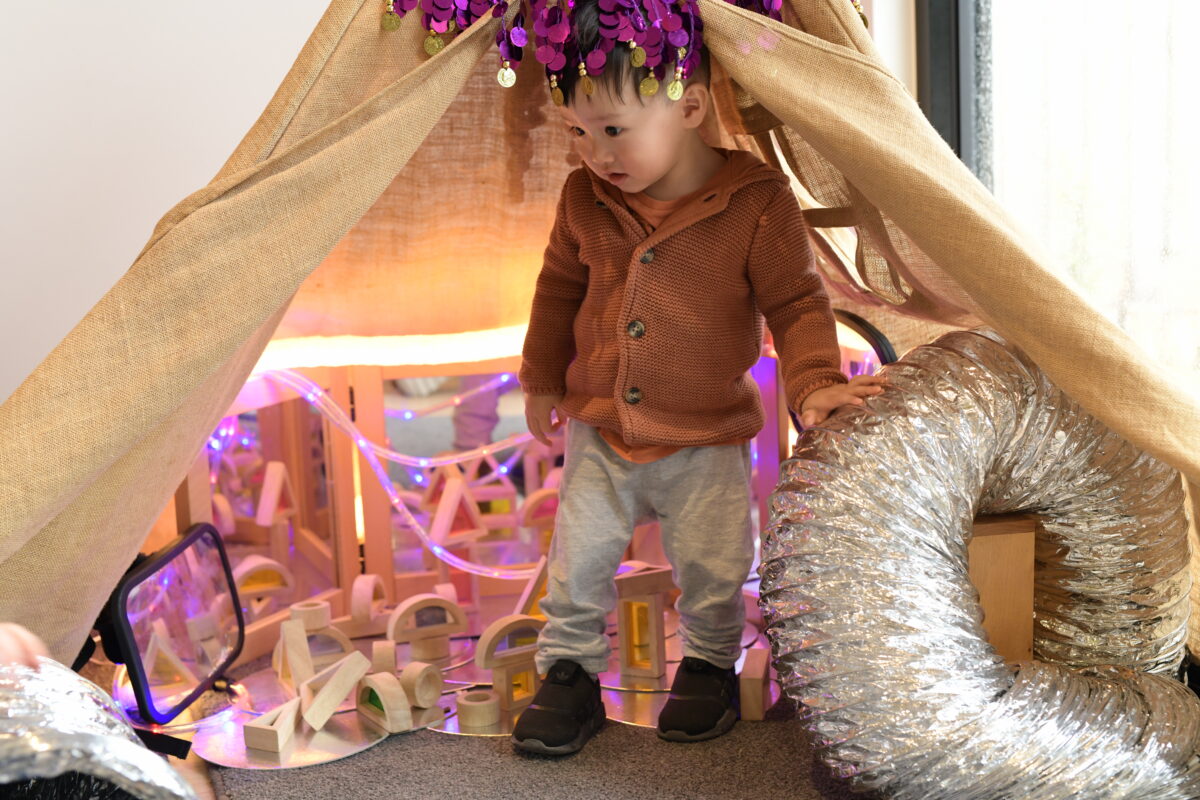
In Montessori, children choose from a set of structured learning materials aligned with developmental stages.
The curriculum is pre-determined but flexible within that structure. Educators observe closely and guide children toward materials that support their growth across literacy, numeracy, sensory development and practical life skills.
For example:
- Pouring and transferring activities build fine motor control
- Bead chains introduce mathematical concepts
- Sandpaper letters support early literacy
The emphasis is on mastery, repetition and independence. While collaboration can occur, the environment largely supports individual work and self-directed focus.
How Do Reggio Emilia and Montessori Differ?
While both Montessori and Reggio Emilia value child-centred learning, they’re also different in their approach to curriculum.
Reggio Emilia embraces an emergent curriculum which evolves based on the interests and inquiries of the children. Educators encourage these interests with intentional provocations.
Discover more: The Benefits of Imagination Play
On the other hand, Montessori follows a pre-determined curriculum, with specific materials and activities designed to support children’s development across different areas and outcomes. Moreover, the Montessori curriculum favours observation by teachers, whereas Reggio Educators favour documentation of observations to share with parents and signpost learning milestones.
The Reggio Emilia approach emphasises community and group-based learning, while Montessori values independent and small group learning.
For a full breakdown of the differences, see the table below!
| Montessori | Reggio Emilia | |
| Learning style | Child-centric, non-traditional. | Child-centric, non-traditional |
| Role of the Educator/Teacher | Observer and facilitator of knowledge. | Collaborator and co-learner. Educators guide learning experiences and ask open-ended questions. |
| Method | Learning through play and self-correcting materials alone or in small groups. Strict development stages. | Children work in small groups in project-based learning. Community and parental involvement encouraged. |
| Curriculum | Pre-determined and can be adapted to primary and secondary education. | Fluid curriculum which is adapted to emerging interests and unique learning styles. |
| Focus | Independence. | Independence and collaboration. |
| Evidence collection | Observation. | Observe and document. |
| Goal | To form independent and curious learners. | To nurture children to become lifelong learners and citizens of the world. |
Which Approach Is Right For Your Child?
There’s no universal answer here.
Some children thrive in structured environments where they can focus deeply and master skills independently. Others flourish in collaborative spaces where ideas are explored through creativity, conversation and long-term projects.
When deciding between Reggio Emilia vs Montessori, consider:
- Does your child prefer working independently or in groups?
- Do they enjoy structured tasks or open-ended exploration?
- How important is family involvement in the learning journey?
- What kind of environment feels aligned with your family values?
Visiting centres, speaking to Educators and observing classrooms in action is often the clearest way to decide. Trust your instincts. After all, you know your child the best.
Experience High-quality Reggio Emilia Education at Explorers
At Explorers Early Learning, our curriculum is inspired by the Reggio Emilia philosophy and embedded within our Learning for Life program. We believe children are capable, creative thinkers who deserve environments that spark curiosity and Educators who genuinely listen.
Across our centres, you’ll see:
- Project-based learning in action
- Rich documentation of children’s thinking
- Natural, thoughtfully designed spaces
- Strong partnerships with families
Reggio Emilia isn’t just a buzzword for us. It shapes how we teach, design environments and connect with our community every day.
Book a tour at Explorers Early Learning to experience our Reggio-inspired environments, meet our passionate Educators and see how children’s ideas truly drive learning.
Because when it comes to early education, the right fit makes all the difference.