
11 December 2025
Somerville Artist in Residence Program: Innovation on Display
Explorers Somerville’s Artist in Residence program uplifts Visual Arts experiences, a bold step forward for early childhood education.
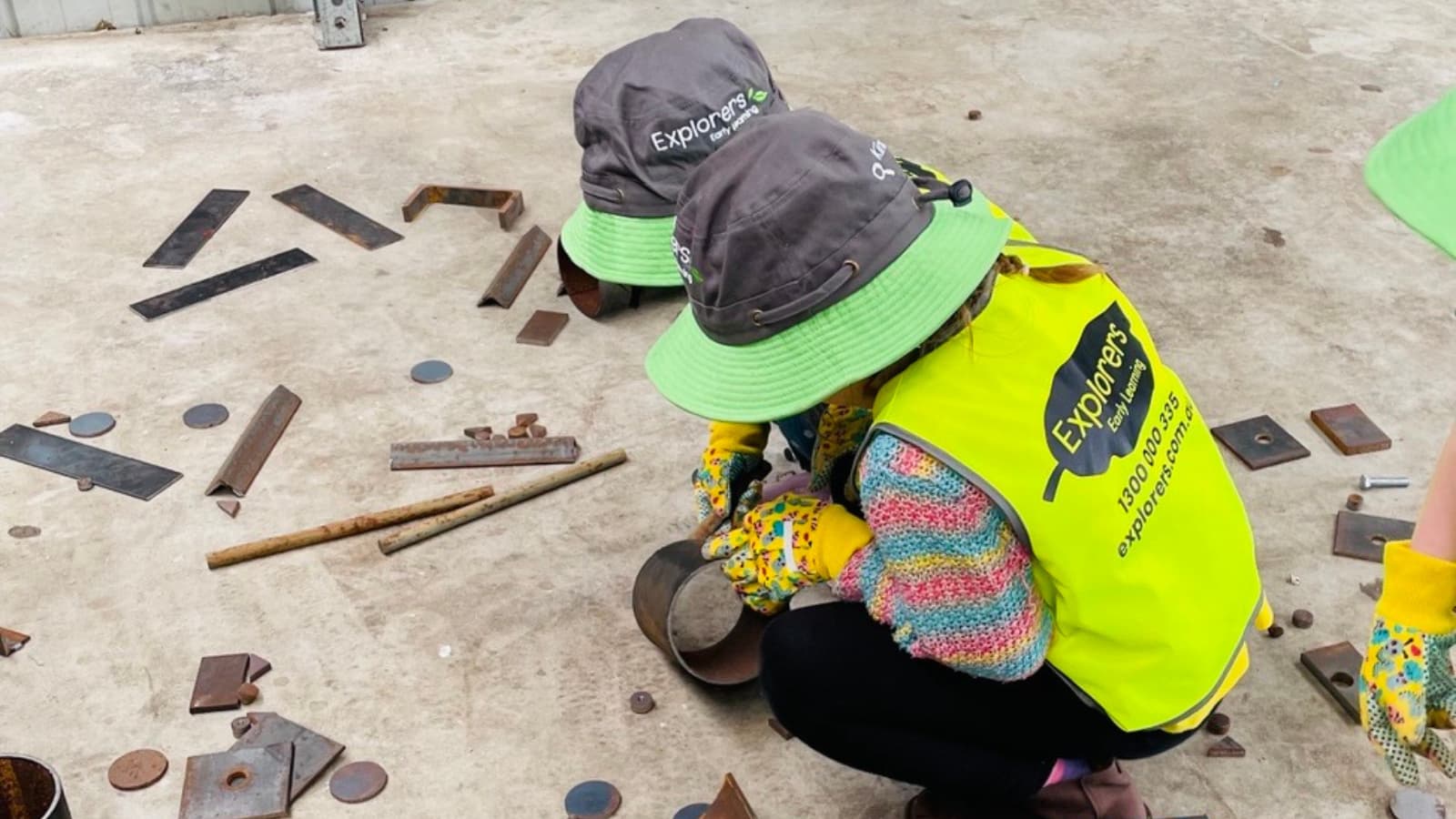
Explorers Somerville’s Artist in Residence program uplifts Visual Arts experiences, marking a bold step forward in how early childhood education can be imagined.
Somerville has been designed as a visionary learning precinct and is located on the Mornington Peninsula, in Melbourne. It’s a destination that Explorers Early Learning children across multiple centres will be able to travel to on excursions.
The farmland location has rustic structures already on site, seamlessly blending indoor spaces with the natural environments. In turn, making Somerville is the perfect location to home to our new Artist in Residence program.
It’s more than a just a destination for children to visit. It’s a working studio, a living classroom, and a space designed to elevate children’s thinking.
Here, the environment itself becomes an active partner in children’s growth.
What is Explorers Somerville?
Additionally, the Bush Kinder program held at Somerville will encourage children to venture further into the surrounding environment, strengthening their relationship with nature and supporting confidence, resilience, and wonder.
Together, these elements form a holistic vision for education. One rooted in sustainability, creativity, and the belief that every child deserves the freedom to explore, question, and discover.
Somerville is not just a place for learning; it is an evolving experience that honours the rights of children to engage deeply with the world around them. It is also the perfect setting to host our Artist in Residency series, a program that invites artists to guide children through hands-on, creative workshops.
A Place of Wonder, A Program of Possibility
The Artist in Residence program allows children to work alongside artists, using a range of materials (such as old steel write, clay, and paint) to then interpret the children’s designs and bring them to life.
“The Somerville Artist in Residence program is an initiative that supports children’s material literacy and cognitive learning,” explains Explorers Pedagogical Thinker in Residence, Kerrie O’Neill.
One of the joys of these experiences is that children have opportunities to exercise their imagination. At Somerville, children discover that every material has stories and possibilities; that ideas can change with another try, and that their voice matters in making decisions about projects.
Children learn about new techniques, experiment with unfamiliar materials, and see their experiments evolve across sessions. For our Educators, too, these experiences are professional learning in action, allowing them to observe an artist’s creative process and draw inspiration from when setting up creative spaces back at the centre.
The result is a dynamic, two-way relationship:
Somerville enriches the Visual Arts curriculum, and the curriculum gives the Artist in Residence program purpose and direction.
For children, families, Educators and the wider community, Somerville represents something rare. It represents a place where creativity is visible, vibrant and deeply valued. Likewise, it’s a location where every idea has room to grow.
The Artist in Residence Experience: A Day in the Life
The morning began with calm preparation at the centre, as children engaged in thoughtful conversations about what the day might bring.
“We spent time ensuring everyone felt organised, informed, and connected to the purpose of our excursion,” shared Erin, Educational Leader of our Frankston North centre.
Upon arriving at Somerville, the Kindergarten children stepped into an environment intentionally designed to provoke imagination, an ecological landscape rich with natural materials, sculptural elements, and spaces shaped by real artists.
Erin described her highlight as “witnessing the children immerse themselves in the natural environment, making authentic connections between what they’ve been exploring at the centre and what they discovered at Somerville.”
The day’s experiences allowed children to see their own ideas in new ways, strengthening their confidence as thinkers and creators. Surrounded by abundant open-ended materials, they experimented freely, revisited concepts, and collaborated with peers.
This approach is one that Erin believes deeply enriches children’s learning. “This program encourages children to carry their ideas forward with confidence and creativity, sparking joy and magic in the learning process,” she said.
These moments supported deeper inquiry, problem-solving, and imagination, helping children extend their thinking and construct new understandings through hands-on discovery. What’s more, the excursion also inspired new possibilities for the Visual Arts program back at Frankston North.
“It inspired us to re-envision our Piazza space by integrating elements of the Artist in Residence approach,” Erin explained.
The importance of Visual Arts in Early Learning
In early learning, Visual Arts programs provide an outlet for children’s imagination and creativity. Hence, allowing children freedom and opportunity to work in an unstructured way.
Australian research consistently highlights that Visual Arts support children’s development from infancy through the kindergarten years.
Some of the ways in which the Visual Arts programs support learning are:
Cognitive Learning: Through drawing, sculpting, painting and constructing, children explore patterns, experiment with cause and effect, and build early problem-solving skills. Their ideas take shape in front of them, helping them understand complex concepts in a tangible way.
Language and Communication: Art provides children with a visual language to communicate with, before they have fully developed a verbal one. They learn to describe their choices, and communicate feelings and ideas that might be challenging to express through words alone.
Wellbeing: Collaborative artworks encourage teamwork, listening, and respect for others’ perspectives.
Fine Motor Development: Using brushes, pencils, clay tools and natural materials strengthens the small muscles in the hands and fingers. These are critical foundations for pre-writing and everyday self-help skills.
Explorers Somerville and the Reggio Emilia Approach
Somerville’s Artist in Residence program is a natural extension of the Reggio Emilia Approach that guides Explorers.
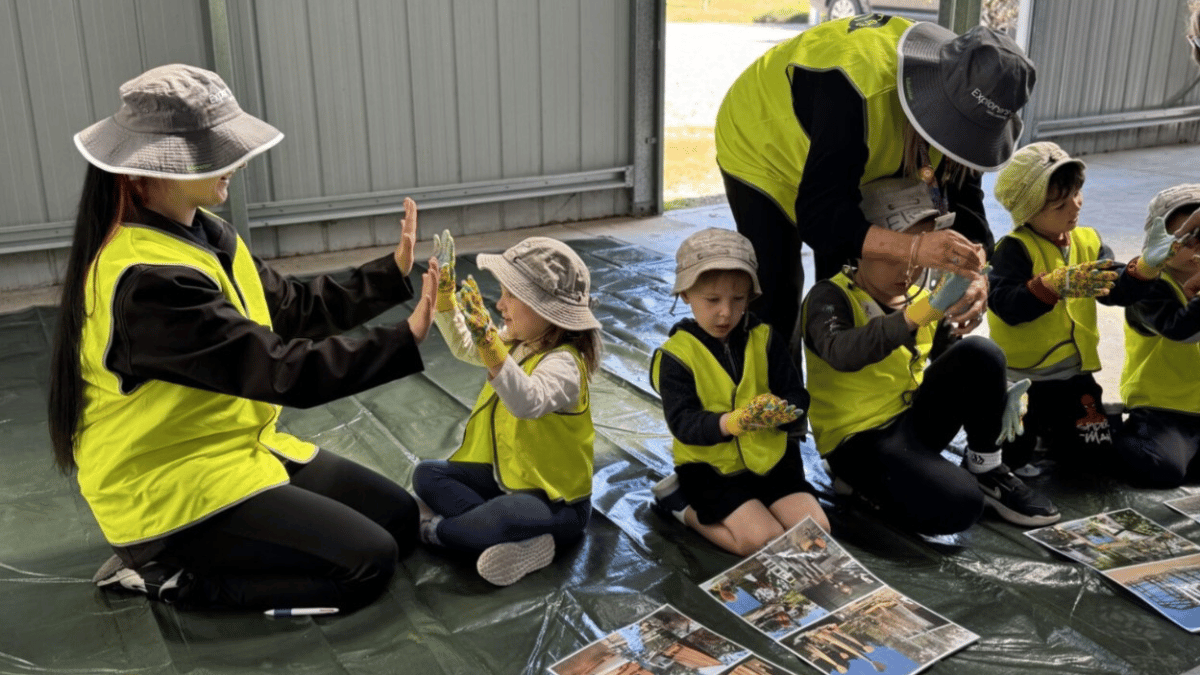
“In Reggio Emilia, children are considered to be researchers alongside Educators. When an Artist in Residence program is initiated, it is done to support children’s investigation and exploration of specific materials,” details Kerrie O’Neill.
“Materials are used as a thinking partner and acknowledges children’s competencies for symbolic, material and conceptual learning.”
Subsequently, children who visit Somerville return to their centres with stories that inspire future projects.
Bringing children into Somerville’s artist workshops expands the learning environment. They don’t just look at art; they enter the making of it. This aligns directly with Explorers’ Reggio-inspired framework and our commitment to child-led explorations.
Centres currently involved in the Artist in Residence program
Curious to learn more about the Artist in Residence program? Discover more from the centres currently taking part in Somerville excursions: