
16 June 2026
Play-Based Learning: How Play Supports School Readiness
Discover how play-based learning builds school readiness naturally by developing confidence, curiosity, and key early skills.
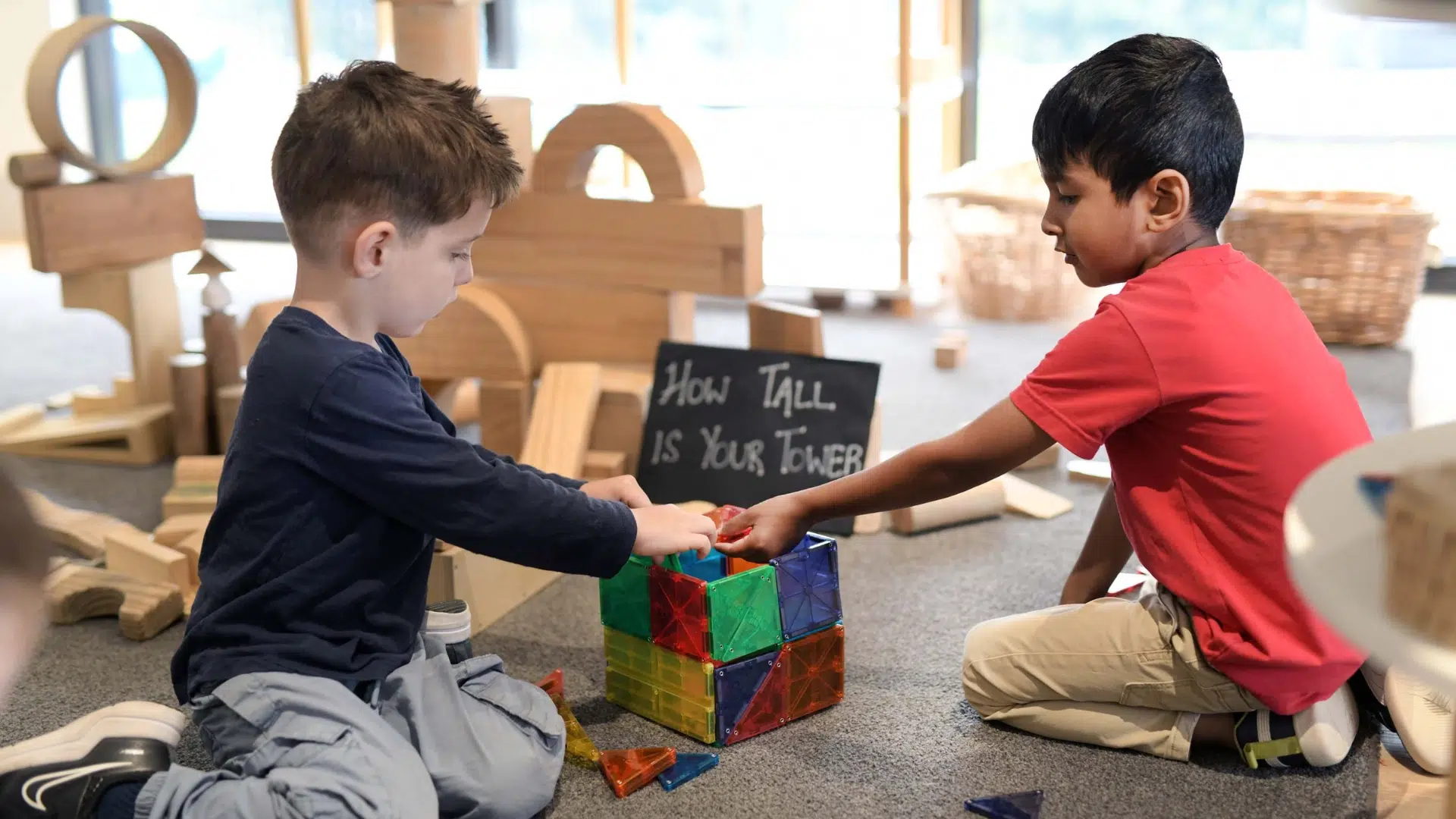
Before children ever pick up a pencil or sit at a desk, they’re already learning the most important skills for school. Not through worksheets or structured drills, but through something far more instinctive…play.
It might look simple on the surface. A group of children building, pretending, negotiating, laughing or testing an idea together. But within those moments, complex learning is happening in real time. Children are communicating, problem-solving, managing emotions, making decisions and learning how to be part of a group.
At a time when preparing for school is often misunderstood as early academics, play-based learning offers a more developmentally aligned truth. Children do not need to be pushed into readiness. They grow into it through meaningful experiences, strong relationships and opportunities to explore at their own pace.
What is Play-Based Learning?
Play-based learning is exactly what it sounds like, learning that happens through play. The thing people often misunderstand is it’s or without purpose. In high-quality early learning and kindergarten programs, educators intentionally design environments, materials and interactions that support children across all areas of development.
Through play, children are actively involved in their learning. They are curious, motivated and connected to what they are doing, which helps new ideas feel more meaningful and lasting.
- Social and emotional skills
- Language and communication
- Early literacy and numeracy awareness
- Problem-solving and critical thinking
- Fine and gross motor development
- Confidence, creativity and independence
Why Play is the Foundation of School Readiness
Play-based learning does more than prepare children for school. It builds the skills behind the skills. While a worksheet may help a child recognise a letter, play helps them concentrate, persist, collaborate, express ideas, solve problems and adapt when something does not go to plan.
These are the capabilities children draw on throughout the school day. They help children join group experiences, follow routines, ask for help, build friendships and feel confident trying something new.
Play teaches them how to:
- Focus and concentrate
- Persist through challenges
- Work with others
- Express ideas and emotions
- Adapt to new situations
These are the capabilities children draw on throughout the school day. They help children join group experiences, follow routines, ask for help, build friendships and feel confident trying something new.
Examples of Play-Based Learning in Kindergarten
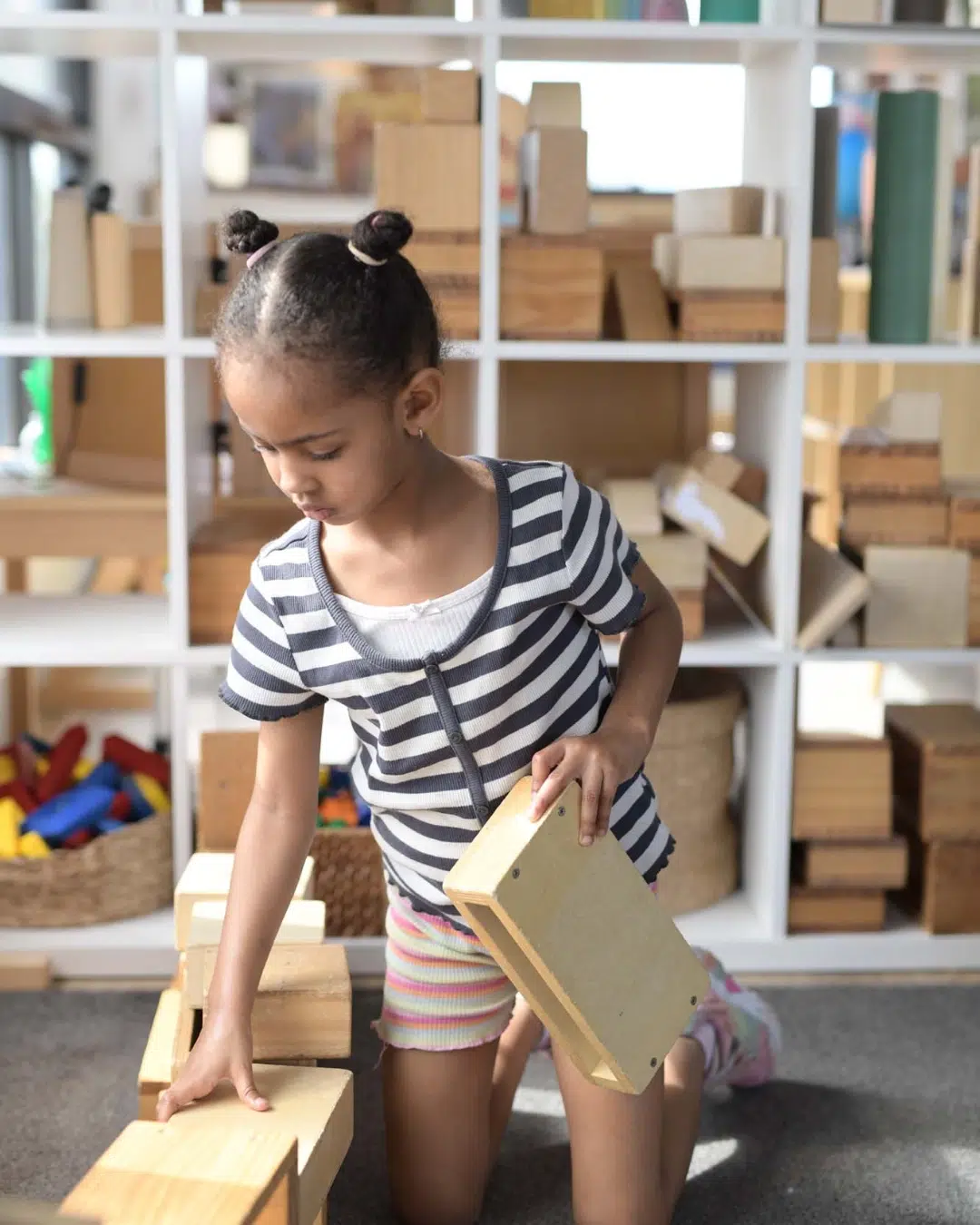
In a play-based kindergarten environment, learning is woven into everyday experiences. Children might explore balance and measurement while building with blocks, develop language through storytelling and pretend play, or practise social skills as they negotiate roles in a shared game.
This reflects the Reggio Emilia-inspired idea that children express their thinking in many ways, through movement, storytelling, construction, drawing, music, conversation and imaginative play.
- Building with blocks to explore balance, counting, patterns and problem-solving
- Pretend play to develop language, empathy and social confidence
- Outdoor play to support movement, coordination and resilience
- Storytelling, songs and conversations to build early literacy
- Group projects that encourage collaboration, listening and shared decision-making
- Open-ended materials that invite children to test ideas and think creatively
Social and Emotional Development
One of the strongest foundations for school readiness is a child’s ability to form relationships and begin managing emotions. Play creates natural opportunities for this.
Discover more: The benefits of imagination play.
Whether children are negotiating roles in a game, taking turns, or navigating disagreements, they’re learning how to:
- Communicate
- Empathise
- Problem-solve
- Manage frustration
These moments may look small, but they help children build emotional regulation, empathy and confidence. Over time, children learn that they can have a big feeling, receive support, and keep participating in the world around them.
Learning Literacy and Numeracy Through Play
A common concern for families is whether play-based learning prepares children academically. The answer is yes, just in a way that feels natural and engaging.
During play, children are constantly developing early literacy and numeracy skills:
- Counting blocks while building
- Recognising patterns in puzzles
- Exploring symbols and signs in pretend play
- Listening, speaking, and storytelling
Because these skills are learned in context, they’re often better understood and retained. Instead of memorising, children are making meaning.
Discover more: How construction play supports early learning.
The Role of Educators in Play-Based Learning
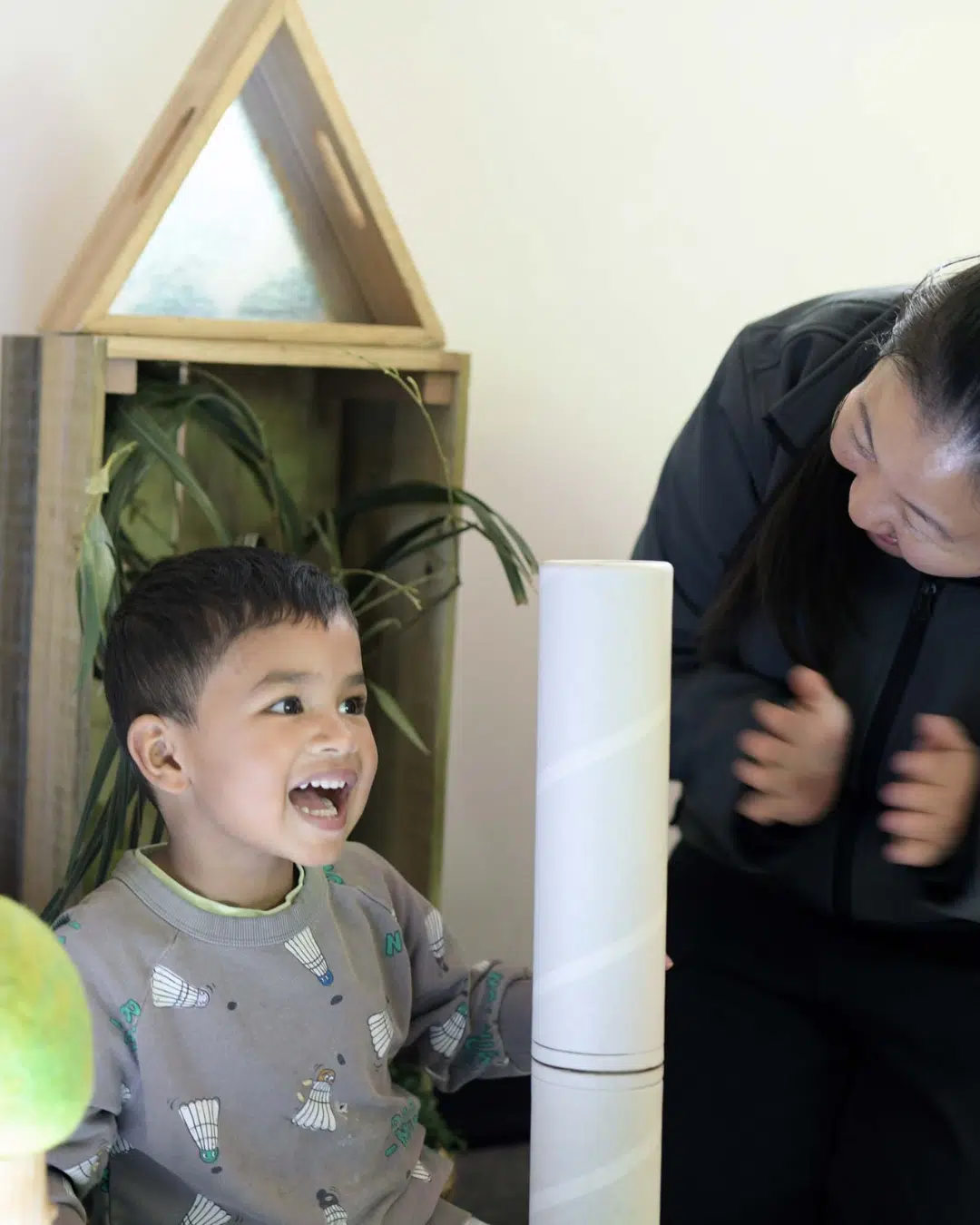
Play-based learning is not about educators stepping back. It is about intentional teaching. Educators observe children closely, notice their interests, introduce new materials, ask thoughtful questions and gently extend their thinking.
This might look like:
- Asking open-ended questions
- inviting children to test a theory
- Introducing new materials or ideas
- Supporting collaboration between children
- Observing and responding to individual interests
It’s a balance of child-led exploration and guided learning. At its best, play-based learning feels joyful to children, but it is also deeply purposeful.
In a Reggio Emilia-inspired environment, the learning space itself plays an important role. Materials, layout and invitations are thoughtfully considered so children can explore ideas, revisit interests and express their thinking in different ways.
Play and the Australian Early Learning Framework
In Australia, play-based learning isn’t just a philosophy, it’s embedded in national standards.
The Early Years Learning Framework (EYLF) recognises play as central to children’s learning, development, and wellbeing. It highlights that children learn best when they are actively engaged, curious, and supported through meaningful experiences.
Kindergarten and early learning programs across Victoria, including Explorers Early Learning, are guided by this framework, ensuring that play-based approaches are not only encouraged but expected.
This means when your child is learning through play, they are not “falling behind,” they are engaging in best-practice, research-backed education.
Supporting Play-based Learning at Home
Families play an important role in extending learning beyond the classroom. The good news? You don’t need to recreate a classroom environment. Some of the most valuable play-based learning happens in ordinary moments.
Follow your child’s interests: If they’re interested in dinosaurs, build on it. Read books, draw, count, imagine.
Make time for unstructured play: Not every moment needs to be scheduled. Open-ended time allows creativity to flourish.
Talk, listen, and engage: Conversations during play build language, understanding, and connection.
Value the process, not the outcome: It’s not about what children create, it’s about what they learn along the way.
Rethinking What “Readiness” Really Means
It’s natural to want children to feel prepared for school. But readiness isn’t about rushing into formal learning, it’s about building a strong foundation.
Play-based learning supports children to become:
- Curious learners
- Confident individuals
- Capable problem-solvers
- Connected members of a community
These are the qualities that truly matter when starting school.
A Natural Transition to School
When children learn through play, they’re not just gaining knowledge, they’re building the confidence and adaptability needed to navigate new environments.
They’re learning how to:
- Join group experiences
- Follow routines
- Express their needs
- Build relationships
So when the time comes to start school, it doesn’t feel like a sudden shift, it feels like a natural next step.
Why Play Matters More Than Ever
In a world that often pushes children to grow up quickly, play offers something essential: time to explore, imagine, and develop at their own pace. It allows children to be active participants in their learning, rather than passive recipients.
And in doing so, it builds a deeper, more meaningful sense of readiness.
How Explorers Supports Play-Based Learning
At Explorers Early Learning, play isn’t just part of what we do, it’s at the heart of our Learning for Life curriculum. Our Reggio Emilia-inspired approach is thoughtfully designed to support every aspect of school readiness, from emotional development and social connection to early literacy and numeracy.
Through carefully planned environments, experienced educators, and a strong focus on relationships, we create spaces where children feel safe to explore, confident to try, and support to grow. Because when learning feels natural, children don’t just prepare for school, they step into it ready to thrive.
The Bigger Picture
School readiness is not about rushing children into formal learning. It is about giving them time to build the social, emotional, physical and thinking skills that help them feel capable in new environments.
When children learn through play, they build the confidence and adaptability needed to take their next step. And when learning feels natural, children do not just prepare for school. They step into it ready to grow.
If you want to see play-based learning in action?
Book a tour at your nearest Explorers Early Learning centre, or explore our kindergarten program to learn more.